
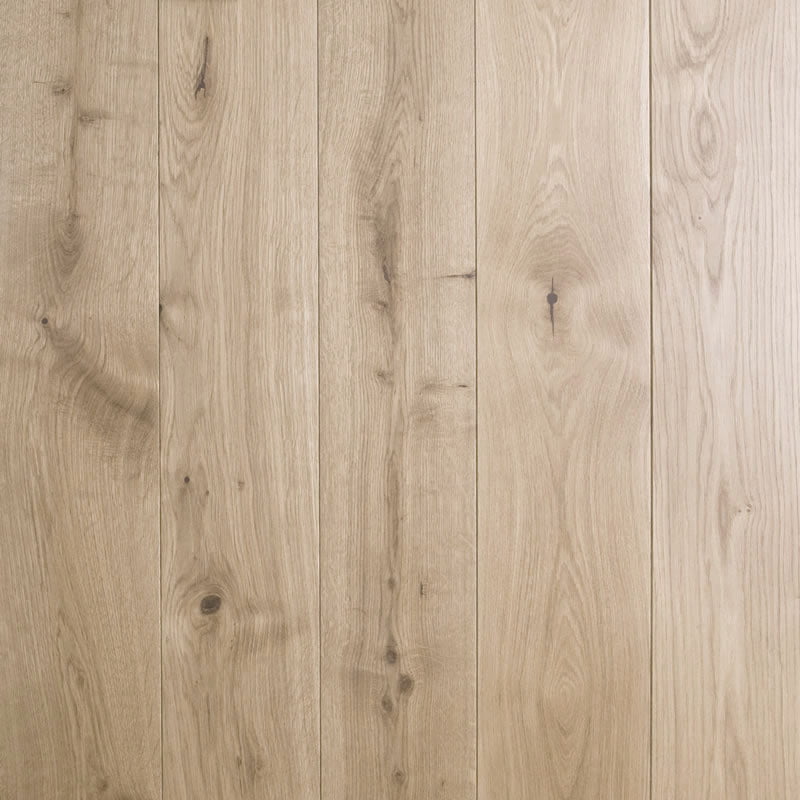
A squeaky board and a sagging floor are not the same problem, and they do not have the same fix. A squeak is usually a loose connection between the subfloor and the framing below it, something you can often fix in an afternoon from above or below. A sag is a change in elevation, a dip, a soft spot, or a slope that was not there when the house was built, and it almost always points to something failing underneath the floor, not the hardwood itself.
We get called out across San Diego County to inspect floors that homeowners assume just need refinishing or a few screws, and in a fair number of cases the real problem is a weakened joist, a water-damaged subfloor panel, or a foundation that has settled unevenly. This guide breaks down what actually causes sagging and squeaking, how to tell which one you have, and when a hardwood flooring repair needs to wait until the structure underneath it is fixed first.
Not sure which one you have? Request a free in-home estimate or call +1 (619) 777-4334.
What Causes a Sagging or Squeaky Hardwood Floor
Hardwood floors do not sag or squeak on their own. Both problems start below the finished surface, in the subfloor and the framing that supports it. There are three causes we see most often on San Diego inspections:
- Weakened or undersized floor joists. Joists that were cut or notched for plumbing and electrical runs, joists spaced too far apart for the span (over 16 inches on center for older construction), or joists that have simply dried out and lost some of their original stiffness over 40 to 60 years all flex more than they should. Flex under foot traffic is what creates both squeaks and, over time, a visible dip in the floor.
- Damaged or delaminated subfloor panels. A slow leak from a bathroom above, a failed roof flashing, or a plumbing line inside a wall can soak a plywood or OSB subfloor panel from underneath without anyone noticing until the finished floor starts to feel soft or spongy. Once a subfloor panel delaminates, it loses most of its structural strength even if the surface still looks fine.
- Settled foundation or pier and beam support. Homes on a raised foundation, especially older homes in coastal and hillside neighborhoods, rely on a grid of piers, posts, and beams under the joists. If a single pier settles into expansive clay soil, sinks after a plumbing leak saturates the ground beneath it, or was undersized to begin with, everything above it, joists, subfloor, and the hardwood, follows it down. This is the most common cause of a floor that slopes noticeably from one side of a room to the other rather than just dipping in one spot.
A fourth, less common cause is truss uplift or seasonal wood movement in the hardwood itself, where boards cup or crown from humidity swings. That looks and feels different from a structural sag (it affects the surface evenly across a wider area and is not tied to a specific spot in the room) and is a much simpler fix.
Is a Squeaky Floor the Same Problem as a Sagging Floor?
No, but they are related and one can lead to the other. A squeak means a board, a subfloor panel, or a joist connection has come loose enough to rub or flex when weight is applied, creating friction noise. On its own, a squeak is a nuisance, not a structural failure. A sag means an actual loss of support, a joist that has weakened, a panel that has failed, or a foundation point that has moved. A sag changes the floor's elevation; a squeak does not.
The overlap is this: a squeak that has been present for years without ever being addressed is a sign of ongoing movement at that connection point, and repeated movement fatigues the wood and fasteners around it. We have opened up floors where a squeak that was ignored for a decade turned out to sit directly over a joist that had cracked partway through. The squeak was the early warning; the sag came later.
Surface Fix or Structural Repair, How to Tell the Difference
Before assuming a squeak or soft spot is a quick fix, check these five things. If any of them are true, treat it as a structural issue and get the subfloor inspected before doing anything to the finished hardwood.
- Place a 6 foot level or a straightedge across the affected area. A gap of more than 3/8 inch under the straightedge over that span means the floor has dropped, not just loosened.
- Check whether doors and windows in the same room stick or no longer close square. Framing that has moved enough to sag a floor usually racks door frames too.
- Look for cracks in drywall at the corners of the ceiling below or the walls of the room above. Structural movement typically shows up in more than one place at once.
- Press on the floor with your full body weight in the soft spot. A squeak-only problem stays firm underfoot. A structural problem gives noticeably, sometimes with a spongy or hollow feel.
- Check for a visible slope with a marble or ball on the floor. If it consistently rolls toward one spot rather than staying put, that spot has settled lower than the rest of the room.
How to Fix Squeaky Hardwood Floors
Once you have confirmed the floor is firm and level (no sag, just noise), squeak repairs are straightforward and usually solve the problem permanently.
From Above the Floor
Trim-head or specialty squeak-repair screws (kits like Squeeeeek No More use a breakaway screw head so the fastener sits below the surface without splitting the board) are driven at an angle through the finished floor and subfloor into the joist below, then the head snaps off flush. This works well when you can locate the joist with a stud finder and the squeak is isolated to a board or two. It leaves a small, fillable hole in the finish, which is a fair tradeoff for a permanent fix.
From Below the Floor
If there is access from a crawl space or unfinished basement, the cleaner fix is working from underneath. Construction adhesive and shims are used to snug the subfloor tight against the joist without putting any fastener through the finished hardwood at all. Where the subfloor has pulled slightly away from the joist across a wider run, sistering a short cleat alongside the joist and screwing up through it closes the gap without touching the surface upstairs.
Board-to-Board Friction Squeaks
Sometimes the squeak is not the subfloor connection at all, it is two hardwood boards rubbing against each other at a seam that has developed a slight gap from seasonal shrinkage. A powdered graphite or a specialty floor lubricant worked into the seam quiets this type without any fasteners, though it is a temporary fix that may need to be repeated each dry season.
How to Fix a Sagging Floor
Sagging repairs depend entirely on what has failed underneath, which is why a proper inspection from below (crawl space, basement, or by pulling a section of subfloor) comes before any repair plan.
Sistering a Weakened Joist
If a joist has cracked, sagged, or was undersized for its span, a new joist of matching or greater depth is bolted or screwed alongside it (sistered) along its full length, sharing the load and restoring stiffness. For a joist that has sagged permanently, a temporary jack post is used to lift the framing back toward level before the sister is fastened, usually raised no more than 1/8 inch per day to avoid cracking plaster, drywall, or the hardwood above.
Replacing a Delaminated Subfloor Panel
Water-damaged plywood or OSB has to come out. This means removing the hardwood over the affected panel (and often a wider margin around it to reach clean fasteners), cutting out the damaged subfloor section, replacing it with new 3/4 inch plywood fastened to the joists, and then patching or replacing the hardwood to match. On engineered or solid hardwood, matching reclaimed boards to existing finish and grain is part of what makes this repair more of a specialty job than a straightforward install.
Correcting a Settled Foundation Point
For pier and beam or raised foundations, a settled support point is corrected with hydraulic jacks and new or reinforced concrete footings, sometimes adding additional piers to spread the load more evenly across problem soil. This is foundation contractor work, not flooring work, and it is the one repair on this list that should always involve a licensed foundation specialist or structural engineer rather than a flooring crew alone.
Once the structure is corrected and confirmed level, the hardwood repair itself is usually a smaller job than homeowners expect, sometimes limited to patching a few boards. In cases where the hardwood over a repaired section cannot be matched well, some homeowners choose to switch that room to waterproof luxury vinyl plank instead of trying to blend new hardwood into decades-old finish, particularly in areas that already had a moisture problem once.
Why Guessing at a Fix Without Checking the Subfloor Backfires
The most common mistake we see is a homeowner (or an unlicensed handyman) treating a sag the same way they would treat a squeak, driving a few screws through the surface and calling it fixed. This backfires for a few predictable reasons:
- Screwing into a joist that has already cracked does nothing. If the joist itself has failed, tightening the subfloor to it just pulls the finished floor down with it as the joist continues to give.
- Refinishing over a soft spot hides the problem instead of solving it. A fresh coat of finish looks great for photos but the subfloor keeps deteriorating underneath, and moisture damage in particular spreads faster once it is sealed in by new finish.
- Filling a dip with leveling compound under new flooring is a cosmetic patch, not a repair. It can make a floor feel level again temporarily, but the underlying support is still compromised and the dip typically returns within a year or two, often worse.
- Ignoring a sag near plumbing risks a bigger loss. If the cause is an active leak (not a one-time event), the subfloor damage keeps expanding every week it is not addressed, which turns a $1,000 panel replacement into a $4,000 to $8,000 repair across multiple rooms.
Older homes in neighborhoods like Coronado and other historic pockets of San Diego County are more prone to this exact situation, original framing that has carried the house for 80 to 100 years, older plumbing runs, and hardwood that has already been refinished multiple times, which makes a proper subfloor check before any repair even more important than it is in newer construction. We handle inspections and repairs for homeowners across the region, including San Diego and the surrounding communities, and we always check the framing before quoting a hardwood repair, not after.
Cost to Fix a Sagging or Squeaky Floor
Costs vary widely because the fix depends on the cause, not just the size of the affected area. Here is what these repairs typically run in San Diego:
| Repair | Typical Cost | Timeline |
|---|---|---|
| Squeak repair, from above or below | $150 - $400 per room | Same day |
| Board-to-board seam lubrication | $75 - $150 | Same day |
| Sistering 1-2 weakened joists | $800 - $2,500 | 1-2 days |
| Subfloor panel replacement (with hardwood patch) | $1,200 - $3,500 | 2-4 days |
| Foundation pier or footing correction | $2,500 - $10,000+ | 1-3 days plus engineer sign-off |
| Full hardwood refinish after structural repair | $3.00 - $5.00 per sqft | 3-5 days |
Foundation repairs carry the widest range because pricing depends on how many piers need correction, soil conditions, and whether an engineer needs to design the fix versus a straightforward footing replacement. A licensed foundation contractor should always provide the structural quote separately from the flooring quote, since the two trades address entirely different parts of the problem. Our free in-home estimate includes an honest assessment of whether what you are seeing is a flooring issue, a framing issue, or something that needs a foundation specialist first.
Frequently Asked Questions
What Does It Mean When Hardwood Floors Squeak?
A squeak means a board or the subfloor panel underneath it has come loose from the joist, and friction between the two surfaces creates noise when weight is applied. It is usually a fastening problem, not a structural one, and can typically be fixed from above with specialty screws or from below with adhesive and shims.
Can a Sagging Floor Be Fixed Without Replacing the Hardwood?
Often yes, if the hardwood itself is not damaged. The structural repair (sistering a joist, replacing a subfloor panel, or correcting a foundation point) happens first, and in many cases only a small section of hardwood needs to be lifted and reinstalled or patched afterward rather than replacing the entire floor.
How Much Does It Cost to Fix a Sagging Floor?
A simple joist sistering repair runs $800 to $2,500. Subfloor panel replacement with a hardwood patch runs $1,200 to $3,500. Foundation pier or footing corrections range from $2,500 to $10,000 or more depending on how many support points are affected and whether an engineer needs to design the repair.
Is a Squeaky Floor a Sign of a Structural Problem?
Usually not on its own, but a squeak that has been ignored for years at the same spot can indicate ongoing movement at that joist connection, which is worth checking. If the floor is also dipping, sloping, or feels soft underfoot in that area, that is the sign of a structural issue rather than a simple squeak.
Can I Fix Squeaky Floors Myself?
Minor squeaks are a reasonable DIY project with a squeak-repair screw kit and a stud finder, provided the floor is otherwise level and firm. If there is any dip, softness, or the floor has never been inspected from below, get a professional assessment first so you are not fastening a symptom instead of the actual cause.
How Do I Know If My Floor Sag Is from the Foundation or the Joists?
A sag limited to one or two joist bays, usually a few feet wide, is more likely a joist problem. A sag that affects a wider area, a full room, or shows up as a consistent slope from one side of the house to the other, points to a foundation or pier support issue. A contractor checking from a crawl space can usually confirm which one within 30 to 60 minutes.
How Long Does It Take to Fix a Sagging Floor?
Joist sistering typically takes 1 to 2 days. Subfloor panel replacement with a hardwood patch takes 2 to 4 days including finish matching and cure time. Foundation pier corrections usually take 1 to 3 days of physical work, though scheduling an engineer's inspection and sign-off beforehand can add 1 to 2 weeks to the overall timeline.
Does Homeowners Insurance Cover Sagging Floor Repair?
It depends on the cause. Sudden, accidental water damage (a burst pipe, for example) is often covered. Gradual settling, long-term soil movement, or wear from age typically is not, since most policies exclude damage from a slow leak that went unnoticed or from normal settling. Check your specific policy and consider getting a written cause-of-damage assessment from your contractor to support a claim.
Will a Sagging Floor Get Worse Over Time?
Yes, in almost every case. A weakened joist continues to flex and fatigue under repeated weight, a wet subfloor panel keeps losing strength until it is replaced, and a settling foundation point typically continues moving until the soil beneath it is stabilized. None of these causes correct themselves, which is why an early inspection costs far less than waiting until the damage spreads to adjacent joists or panels.