
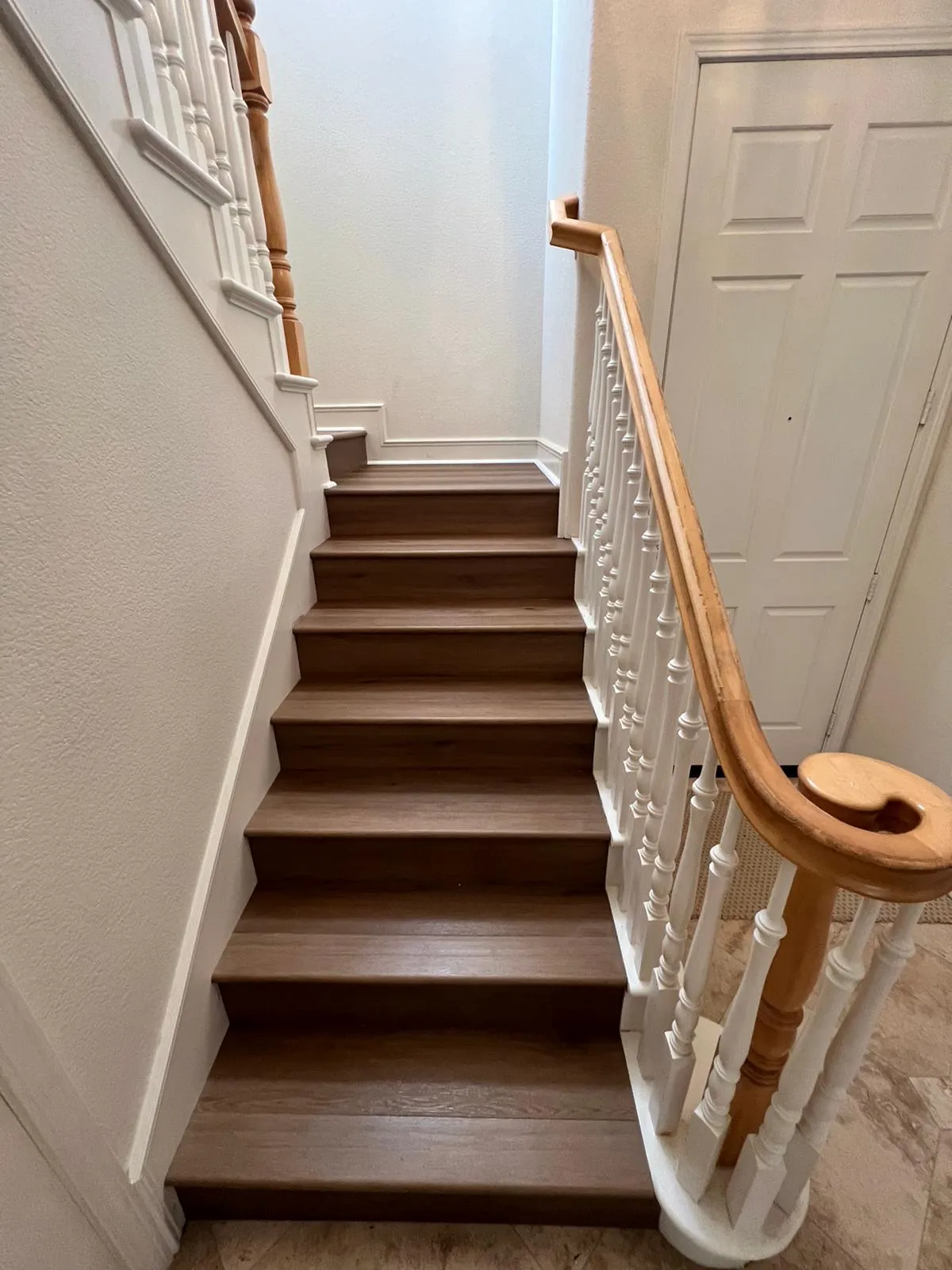
Professional hardwood floor refinishing takes 3 to 5 days of active work for an average home. That covers sanding, staining, and applying the finish coats. The bigger number to plan around is cure time: you can usually walk on the floor in socks within 24 hours, but furniture should stay off for 3 to 7 days and area rugs for two to four weeks while the finish fully hardens. The exact timeline depends on the finish you choose, the size of the floor, and how many coats it needs. To book the work itself, see our hardwood floor refinishing in San Diego page.
Below is the full day-by-day timeline, what drives it longer or shorter, and the cure-time rules that decide when you can actually live on the floor again.
- Active work: 3 to 5 days for an average home
- Walk on it (socks): about 24 hours after the last coat
- Move furniture back: 3 to 7 days (water-based cures faster)
- Area rugs back down: 2 to 4 weeks
- Water-based finish: faster cure, lower odor
- Oil-based finish: longer cure, stronger odor, amber tone
Thinking about refinishing your floors? Request a free estimate or call +1 (619) 777-4334.
The Day-by-Day Hardwood Refinishing Timeline
Here is how a typical full refinish runs for an average home of roughly 800 to 1,200 square feet. Larger homes and multi-room jobs stretch the schedule, but the sequence stays the same:
| Stage | Time | What Happens |
|---|---|---|
| Day 1: Sanding | 1 day | Coarse-to-fine sanding passes remove the old finish and level the wood. Edges and corners done by hand or edger. |
| Day 1-2: Staining (optional) | 0-1 day | If you are changing color, stain goes on and needs to dry before finish. Natural (no stain) skips this. |
| Day 2-4: Finish coats | 2-3 days | 2 to 3 coats of polyurethane, each needing dry time and a light buff between coats. |
| Day 4-5: Final cure begins | ongoing | Last coat goes on. Light foot traffic after about 24 hours; full cure continues for days to weeks. |
In San Diego specifically, the active sanding-to-final-coat work is usually 3 to 5 days. Our mild, dry climate actually helps finish coats flash off and dry on schedule, where high humidity elsewhere can slow each coat.
Cure Time: When Can You Actually Use the Floor?
Drying and curing are not the same thing. A coat is dry to the touch in hours, but the finish keeps hardening for days or weeks. Rushing furniture or rugs back on is the most common way people damage a fresh refinish. Use this schedule:
- Walk in socks: about 24 hours after the final coat.
- Pets and shoes: wait 48 hours or more.
- Move furniture back: 3 to 7 days. Lift, do not drag, and use felt pads.
- Replace area rugs: 2 to 4 weeks. Rugs trap solvents and can cloud or imprint a finish that is not fully cured.
How the Finish Type Changes the Timeline
The single biggest factor in cure time is whether you choose a water-based or oil-based polyurethane:
| Finish | Dry Between Coats | Furniture Back | Notes |
|---|---|---|---|
| Water-based poly | 2-4 hours | 3-4 days | Low odor, dries clear, fast. Most common today. |
| Oil-based poly | 8-24 hours | 5-7 days | Strong odor, amber tone, very durable, slower. |
| Hardwax oil | varies | 1-2 days light use | Natural look, easy spot repair, longer full cure. |
Water-based finishes let you get back to normal faster and are far easier to live with during the project. Oil-based finishes take longer but give that traditional warm amber look some homeowners want. We use dust-contained sanders either way so the home stays livable.
What Makes Hardwood Refinishing Take Longer
- Square footage. More floor means more sanding and more coating time. Whole-home jobs can run a week or more.
- Staining. Adding or changing color adds a full dry day before finish coats start.
- Number of coats. Three coats instead of two adds a day. High-traffic homes benefit from the extra coat.
- Repairs. Replacing damaged boards, fixing deep gouges, or closing gaps adds time before sanding.
- Stairs and detail work. Stairs are hand-sanded and slow the schedule noticeably.
- Oil-based finish. Longer dry time between every coat stretches the whole job.
Can You Stay in the House During Refinishing?
Often yes, with planning. The sanded rooms are off-limits while coats cure, so you need a path around the work and a place to stay off the floor. A dust-contained sanding system (Festool or Bona) keeps most of the dust out of the air, which makes staying home realistic. The bigger issue is odor: oil-based finishes have strong fumes for a few days, so sensitive households often leave for those nights. Water-based finishes have far less odor and are easier to live with.
If your floor is solid hardwood that is only worn rather than damaged, refinishing keeps a valuable floor in place instead of replacing it. Our engineered vs solid hardwood guide explains which floors are good refinishing candidates and which are not.
How Often Can Hardwood Floors Be Refinished?
Solid hardwood can typically be sanded and refinished 3 to 5 times across its life, depending on board thickness and how much wood each sanding removes. Engineered hardwood depends on its wear layer: a 3mm or thicker veneer can usually take one or two light refinishes, while a thin 1mm veneer cannot be sanded at all. A full refinish every 7 to 10 years is normal for a floor in regular use.
Frequently Asked Questions
How Long Does Hardwood Floor Refinishing Take?
Hardwood floor refinishing takes 3 to 5 days of active work for an average home, covering sanding, optional staining, and 2 to 3 finish coats. Larger homes, added stain color, extra coats, or oil-based finish push it longer. Plan for full cure to continue for days to weeks after the last coat.
How Long Before You Can Walk on Refinished Hardwood Floors?
You can usually walk on refinished hardwood in socks about 24 hours after the final coat. Wait at least 48 hours before walking in shoes or letting pets on the floor. The finish is dry to the touch quickly but keeps hardening, so light, careful traffic only at first.
How Long Before You Can Put Furniture Back After Refinishing?
Wait 3 to 7 days before moving furniture back. Water-based finishes are usually ready in 3 to 4 days; oil-based finishes need 5 to 7. Lift furniture rather than dragging it, and use felt pads. Keep area rugs off for 2 to 4 weeks so the finish can fully cure underneath.
Can You Stay in the House During Hardwood Refinishing?
Usually yes, especially with a dust-contained sander and a water-based finish, which has low odor. You will need a path that avoids the curing floors. Oil-based finishes give off strong fumes for a few days, so households with sensitivities often stay elsewhere during that part of the job.
How Often Can Hardwood Floors Be Refinished?
Solid hardwood can be refinished 3 to 5 times over its life. Engineered hardwood depends on its wear-layer thickness: a 3mm or thicker veneer can take one or two light refinishes, while a thin 1mm veneer cannot be sanded. Most floors in regular use get a full refinish every 7 to 10 years.