
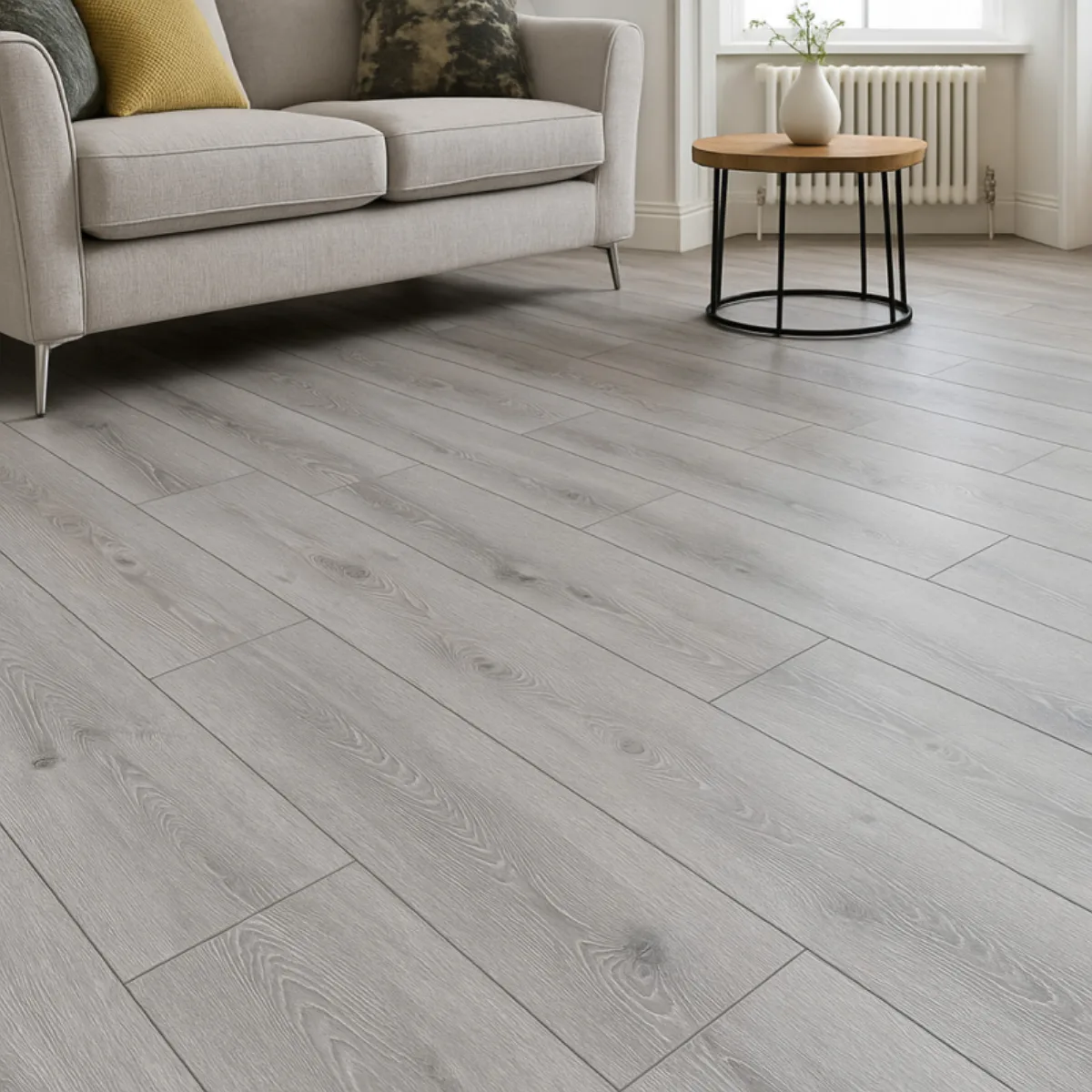
Laminate flooring ranges from 6mm to 12mm thick, and 8mm to 12mm is the standard for residential use. Thickness is measured from the bottom of the board to the top of the core, not including any attached underlayment. Thicker laminate (10mm to 12mm) feels more solid underfoot, sounds quieter, and hides minor subfloor imperfections better, but thickness alone does not determine how scratch-resistant or durable the surface is. That job belongs to the AC wear rating, which is a separate spec people often confuse with thickness. For local product options, see our laminate flooring installation in San Diego page.
Below we break down what each thickness is actually for, why thicker is not automatically better, how the AC wear rating works, and how to pick the right combination for your room.
- 6mm to 7mm: Budget and light-use rooms, rentals, closets
- 8mm: The most common residential thickness, good all-rounder
- 10mm: Quieter and more solid feel, good over slab
- 12mm: Most solid feel, best at hiding minor subfloor dips
- Thickness is feel and sound. The AC rating is durability.
- Always confirm both the mm thickness and the AC rating before buying.
Not sure which thickness fits your rooms? Request a free estimate or call +1 (619) 777-4334.
What Laminate Thickness Actually Measures
Laminate thickness, given in millimeters, is the height of the board itself: the wear layer, the printed design layer, the HDF (high-density fiberboard) core, and the backing. It does not include any pad or underlayment, even when that pad is attached to the plank. So a 12mm plank with a 2mm attached pad is still sold as 12mm.
Most of the thickness is the HDF core, and the core is what gives the floor its rigidity and feel. A thicker core spans small dips in the subfloor better and produces a more solid, less hollow sound when you walk on it. That is the real, tangible difference thickness makes.
Laminate Thickness Options Compared
Here is how the common laminate thicknesses compare on feel, noise, and typical use:
| Thickness | Feel and Sound | Best For |
|---|---|---|
| 6mm - 7mm | Thinner, more hollow, more flex | Budget jobs, closets, low-traffic rentals |
| 8mm | Solid enough for most homes | The standard residential choice, bedrooms, living areas |
| 10mm | Quieter, more solid underfoot | Whole-home installs, homes over concrete slab |
| 12mm | Most solid, best sound dampening | High-traffic homes, uneven subfloors, premium feel |
For most San Diego homes we install 8mm to 12mm. Over a concrete slab, 10mm and 12mm have a noticeable edge because the extra core mass makes the floor feel less like walking on a hard surface.
Is Thicker Laminate Better?
Thicker laminate is better for feel and sound, but not automatically better for durability. A 12mm board does not resist scratches, dents, or fading any better than an 8mm board if they share the same AC wear rating. What thicker laminate genuinely does better:
- Feels more solid. Less flex and a more substantial step, closer to engineered hardwood.
- Sounds quieter. Less of the hollow click that thin laminate makes, especially over slab.
- Hides minor subfloor dips. A thicker, stiffer board bridges small imperfections that a thin board telegraphs.
- Often has better locking joints. Thicker planks tend to use deeper, stronger click profiles.
What thickness does not change is surface durability. That comes from the AC rating. Pay for 12mm if you want the feel; pay attention to the AC rating if you want the wear resistance.
Thickness vs AC Wear Rating
The AC rating (Abrasion Class) measures how well the laminate surface resists wear, scratching, and impact. It runs from AC1 to AC5 and is the single most important durability spec, more important than thickness. A thin 8mm board with an AC4 rating will outlast a thick 12mm board rated AC3 in a busy hallway. The rating is set by independent abrasion testing; in North America the North American Laminate Flooring Association (NALFA) certifies laminate to these standards.
| AC Rating | Rated For | Use It In |
|---|---|---|
| AC1 | Light residential | Closets, bedrooms (rarely sold now) |
| AC2 | Moderate residential | Bedrooms, low-traffic rooms |
| AC3 | Heavy residential / light commercial | Most homes, living rooms, kitchens |
| AC4 | Heavy residential / general commercial | Busy households, hallways, rentals, offices |
| AC5 | Heavy commercial | Retail, high-traffic commercial spaces |
For a family home with kids and pets, AC4 is the sweet spot. AC3 is fine for lighter use. The mistake to avoid is buying a thick board and assuming it is durable without checking that the AC rating matches your traffic. If you are also weighing waterproofing and feel against laminate, our LVP vs hardwood guide and vinyl plank flooring page cover the alternatives.
Thickness and Underlayment
Underlayment is the thin pad between the laminate and the subfloor. It adds cushioning, dampens sound, and over concrete provides a moisture barrier. Some laminate comes with underlayment pre-attached, which speeds installation and prevents a common mistake: doubling up.
Do not add a separate underlayment under a plank that already has one attached. Too much cushion under the floor lets the locking joints flex and eventually fail. If your plank has attached pad and you are over concrete, you may still need a separate 6-mil vapor barrier, but lay it under the pad, not a second cushion layer. Matching the right underlayment to the floor and subfloor is part of every install we quote.
What Thickness to Choose by Room
| Room or Situation | Recommended Thickness | Minimum AC Rating |
|---|---|---|
| Bedrooms, low traffic | 8mm | AC3 |
| Living room, family room | 8mm - 12mm | AC3 - AC4 |
| Hallways, entry, high traffic | 10mm - 12mm | AC4 |
| Kitchen (water-resistant laminate) | 10mm - 12mm | AC4 |
| Over concrete slab | 10mm - 12mm | AC3 - AC4 |
| Rentals and multifamily | 8mm - 10mm | AC4 |
Planning to install over an existing floor? Thickness affects the final height at doorways and under appliances. Our guide on whether you can install laminate over existing floors covers the height and flatness issues to check first.
Frequently Asked Questions
What Thickness of Laminate Flooring Is Best?
For most homes, 8mm to 12mm is best. 8mm is the standard all-rounder for bedrooms and living areas. 10mm to 12mm is worth it for high-traffic rooms, installs over concrete slab, and anywhere you want a more solid, quieter feel. Pair the thickness with at least an AC3 rating for homes and AC4 for busy households.
Is Thicker Laminate Flooring Better?
Thicker laminate feels more solid, sounds quieter, and hides minor subfloor dips better, but it is not automatically more durable. Surface durability comes from the AC wear rating, not thickness. A thinner board with a higher AC rating can outlast a thick board with a low one, so check both specs.
What Is the Difference Between Laminate Thickness and AC Rating?
Thickness (in mm) is the height of the board and controls feel, sound, and how well it bridges subfloor imperfections. The AC rating (AC1 to AC5) measures surface resistance to scratching, wear, and impact. Thickness is about comfort and stability; the AC rating is about durability. Both matter and they are independent.
Does Thicker Laminate Need Underlayment?
Yes, laminate needs underlayment unless it has a pad pre-attached, regardless of thickness. Do not stack a second underlayment under a plank that already has one, because too much cushion makes the locking joints fail. Over concrete you still need a vapor barrier, placed under the cushion layer.
What Does Mm Mean on Laminate Flooring?
The mm figure is the thickness of the laminate board in millimeters, measured from the backing to the top of the wear layer and not including any attached pad. Common options are 6mm, 7mm, 8mm, 10mm, and 12mm. Higher mm means a thicker, more solid-feeling board, not necessarily a more scratch-resistant one.