
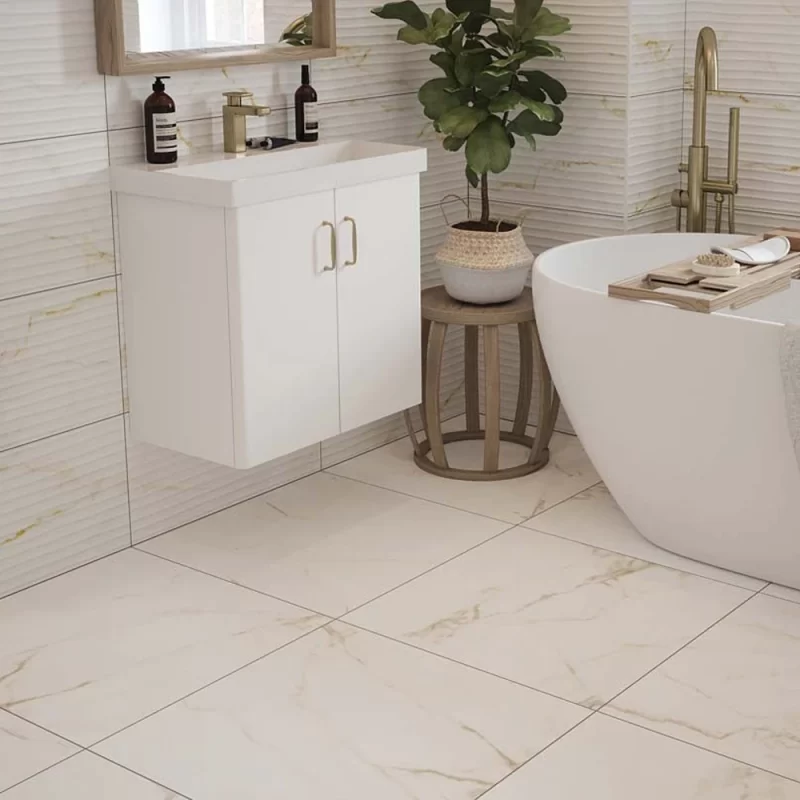
Professional bathroom flooring installation is not just laying tile or vinyl over the existing subfloor. It means demolition, a bonded waterproofing membrane rated for constant moisture, a slope to the drain, subfloor leveling, and a material that will not fail when 40 to 80 gallons of shower water hit it every week. Skip any one of those steps and the floor looks fine for a year, then grout cracks, tile lifts, or water reaches the subfloor and rots it from underneath.
We install and waterproof bathroom floors across San Diego County using porcelain and natural stone tile and waterproof luxury vinyl plank, following Tile Council of North America (TCNA) wet-area methods on every job. This guide walks through what a proper installation actually involves, what it costs, and the mistakes that cause most bathroom floor failures we get called to fix.
Ready to start your bathroom project? Request a free in-home estimate or call +1 (619) 777-4334.
What Professional Bathroom Flooring Installation Involves
A typical bathroom floor project has five stages: demolition of the old floor down to the subfloor, subfloor repair and leveling, waterproofing, material installation, and grout or seam sealing. Bathrooms also require a slope of about 1/4 inch per foot toward the drain in shower pans, and a moisture-tolerant transition where the bathroom floor meets hallway flooring like hardwood or carpet in an adjacent bedroom.
Most licensed installers also pull a permit for any plumbing relocation (moving a toilet flange or drain) and test the subfloor for level before setting any material, since a floor that is out of level by more than 3/16 inch over 10 feet will telegraph through tile and cause lippage at the seams.
Waterproofing and Membrane Systems
Waterproofing is the step that separates a bathroom floor from every other room in the house, and it is the step most often skipped by unlicensed installers. We use one of three systems depending on the substrate and budget:
| System | Best For | Cure Time |
|---|---|---|
| Uncoupling membrane (Schluter-DITRA or equivalent) | Tile over plywood or slab, handles minor cracks | Ready to tile same day |
| Liquid-applied membrane (RedGard or equivalent) | Full wet-area waterproofing, showers and floors | 24 to 48 hours between coats |
| Sheet membrane | Commercial bathrooms, heavy moisture exposure | Ready to tile after seam sealing cures, about 24 hours |
We follow TCNA Handbook methods for wet-area assemblies, which specify membrane placement, seam overlap, and slope requirements for showers and bathroom floors. You can review the published standards directly at the Tile Council of North America. Skipping a membrane and relying on grout alone to keep water out is the single biggest cause of subfloor rot we see when we tear out a failed bathroom floor.
Best Bathroom Flooring Materials
Two materials handle bathrooms well: tile and waterproof vinyl plank.
Porcelain and Natural Stone Tile
Porcelain tile is close to 0 percent water absorbent, does not stain, and holds up to decades of daily use. Natural stone (travertine, marble, slate) looks higher-end but needs periodic sealing to stay water-resistant. Tile is the standard choice for shower floors and walls because it can be sloped and sealed at the drain.
Waterproof Luxury Vinyl Plank
Rigid-core LVP with a fully sealed click-lock or glue-down installation is 100 percent waterproof at the surface and considerably cheaper and faster to install than tile. It will not handle a shower pan (tile is required there for slope and drain integration), but for the rest of a bathroom floor it performs well and feels warmer underfoot than tile in the morning.
Can You Install Hardwood in a Bathroom?
No, we do not recommend solid or engineered hardwood in a full bathroom with a tub or shower. Even engineered hardwood's cross-ply core cannot handle standing water, condensation, and daily humidity spikes long term. The wood will cup, gap, or delaminate at the seams within a few years, and no finish fully protects it from a bathroom's moisture load.
The one exception is a powder room with no shower or tub, where humidity stays low. Even there, we recommend a moisture-tolerant engineered product and a very tight door seal, and tile or LVP is still the safer long-term choice.
Subfloor Prep and Moisture Testing
Before any waterproofing goes down, we check the subfloor for level, patch any deflection in plywood, and on slab bathrooms, run a calcium chloride or relative humidity probe test, the same slab moisture testing we do for every San Diego flooring install. A bathroom on a slab that already reads high on a moisture test needs additional vapor mitigation before tile or LVP goes down, since bathrooms add moisture load on top of whatever the slab is already carrying.
For plywood subfloors, we confirm 5/8 inch minimum thickness under tile and address any soft spots from a prior leak before installing new flooring. Installing over a soft or water-damaged subfloor voids the point of waterproofing the new floor. For general guidance on moisture and mold prevention in wet rooms, the EPA's mold and moisture resources are a good reference for homeowners.
Installation Timeline Day by Day
For a typical 50 to 100 square foot bathroom (average size for a full bath), here is a realistic schedule:
| Day | Work Completed |
|---|---|
| Day 1 | Demolition of old flooring, subfloor inspection and repair, moisture test |
| Day 2 | Waterproofing membrane applied, first coat cures |
| Day 3 | Second membrane coat if liquid-applied, or begin tile/LVP set if using uncoupling membrane |
| Day 4 | Tile set with thinset, or LVP installed; grout applied the next day after tile cures 24 hours |
| Day 5 | Grout seals, transitions installed, toilet and fixtures reset, final walkthrough |
LVP-only bathrooms (no shower pan work) move faster, often 2 to 3 days total since there is no grout cure time to wait through.
Bathroom Flooring Cost by Material
Costs below are fully installed, including waterproofing, for a 50 square foot bathroom:
| Material | Installed Cost/sqft | 50 sqft Bathroom Total |
|---|---|---|
| Sheet vinyl | $4.00 - $7.00 | $200 - $350 |
| Waterproof LVP | $6.00 - $10.00 | $300 - $500 |
| Porcelain tile | $8.00 - $18.00 | $400 - $900 |
| Natural stone tile | $12.00 - $25.00 | $600 - $1,250 |
Add $300 to $800 if the shower pan itself needs to be rebuilt, and add cost if the toilet flange needs to be reset to match new floor height. Our free in-home estimate includes a moisture test and an exact quote before any work starts.
Common Mistakes That Cause Bathroom Floor Failures
- No waterproof membrane, grout alone relied on to block water. Grout is not waterproof on its own; it is porous and needs a membrane underneath to actually stop moisture.
- Wrong grout for the joint width. Sanded grout used in joints under 1/8 inch cracks; unsanded grout used in wide joints shrinks and pulls away.
- No slope to the drain in the shower pan. Water pools instead of draining, which saturates grout lines and shortens the floor's life by years.
- Skipping the moisture test on a slab bathroom. Installing over a slab that is still curing or already reads high pushes moisture up through the new floor within months.
- Toilet flange left at the wrong height after new flooring. A flange that sits too low after adding tile or LVP causes a slow leak at the wax ring that can go unnoticed for months.
Frequently Asked Questions
What Is the Best Flooring for a Bathroom?
Porcelain tile is the best all-around bathroom flooring because it is nearly waterproof, handles shower pan slope requirements, and lasts decades. Waterproof LVP is a strong second choice for the rest of the bathroom floor outside the shower, offering a warmer feel and faster, cheaper installation.
How Long Does It Take to Install Bathroom Flooring?
A full bathroom floor with a waterproofed shower pan typically takes 3 to 5 days including cure time between membrane coats and after grouting. A simple LVP-only bathroom floor without shower pan work can be done in 2 to 3 days.
Do You Need a Waterproof Membrane Under Bathroom Tile?
Yes. Tile and grout alone are not waterproof enough for a bathroom. A membrane like Schluter-DITRA or a liquid-applied product such as RedGard goes underneath the tile to stop water from reaching the subfloor, following TCNA wet-area installation methods.
Can You Put LVP in a Bathroom?
Yes, rigid-core waterproof LVP works well in bathrooms outside the shower or tub area, which still needs tile for slope and drain integration. LVP is faster and cheaper to install than tile and performs well against splashing and humidity.
Why Is My Bathroom Floor Cracking?
Cracked grout or tile in a bathroom is usually caused by subfloor movement, an unleveled substrate, or the wrong grout type for the joint width. It can also mean the waterproofing failed and moisture is affecting the subfloor underneath, which requires a full tear-out to fix properly.
How Much Does It Cost to Waterproof a Bathroom Floor?
Waterproofing a standard 50 square foot bathroom floor typically adds $200 to $500 to the installation cost, depending on whether an uncoupling membrane or a liquid-applied system is used. It is built into our installed pricing rather than billed separately.
Is Tile or Vinyl Better for a Bathroom?
Tile is better for the shower pan and offers more design options and a higher-end look. Vinyl plank is better for cost, comfort underfoot, and speed of installation for the rest of the bathroom floor. Many homeowners use tile in the shower and LVP or tile in the remaining floor area.
Can Bathroom Flooring Be Installed Over Old Tile?
Sometimes, if the old tile is flat, well-bonded, and does not have failed waterproofing underneath. We test for hollow spots and moisture before recommending an overlay. If the old waterproofing is compromised, a full tear-out is the only reliable fix.
What Are Good Bathroom Floor Tile Ideas?
Large-format porcelain (12x24 or larger) reads modern with fewer grout lines to clean. Wood-look porcelain plank adds warmth without sacrificing waterproofing. Small mosaic or pebble tile works well in the shower pan itself for slope. Light colors make a small bathroom feel bigger, and matte finishes hide water spots better than high-gloss.
How Do I Clean a Bathroom Floor?
Sweep or dry-mop first to remove grit that can scratch the surface, then damp-mop porcelain tile or waterproof LVP with a pH-neutral cleaner. Avoid vinegar or acidic cleaners on natural stone tile since they etch the surface over time. Reseal grout lines and natural stone annually to keep water from soaking in.